of our terminal patients don’t know they’re dying — because the family, not the patient, decides.
Answered byCare team planningThe families who care for the world get the worst care at the end.
Twelve countries — the Philippines, Nigeria, India and more — are the world’s biggest exporters of healthcare workers. Their families back home pay the highest cost for end-of-life care and get the worst quality of death.
people across these twelve countries are pushed into poverty by individual healthcare spending.
Answered byCare fund poolingare projected to die every year with unaddressed severe pain by 2060 — two and a half times today.
Answered byPatient advocacyThree circles of care, one support system.
Your immediate family, your local or chosen family, and your family back home usually plan in separate conversations, if they plan at all. A Whole Family Matter brings all three into the same place, around the person who matters most.
 Help is on the way
One whole family
support system
Care Planning
Your immediate family, your family back home, and your local or chosen family answer the questions that matter in one shared space. An ongoing conversation, not a one-time form.
Care Fund
Pool end-of-life care funds with shared visibility and family-agreed release — because generations are financially interdependent, and no one should carry the cost alone.
Patient Advocacy
A guided workbook that teaches care teams to advocate — so dignified end-of-life experiences get delivered, most especially in the world’s worst places to die.
Care team planning
It starts with a question.
Based on the Uniform Health-Care Decisions Act (UHCDA) 2023 and collaboration with subject matter experts, we crafted 30 questions that lead to love — so a whole family can deliver dignified end-of-life experiences together. Every question moves through three checkpoints.
- Checkpoint 1
Your position
“How do you really feel about death and dying?”
Every question starts with where you stand today. Choose the one option that fits — each opens up to explain why it matters, what the research shows, and what it means for your decisions.
- Checkpoint 2
Your challenges
“What concerns, issues, and challenges might you be facing?”
The same follow-up comes with every question, so the hard parts get named. Choose up to two.
- Checkpoint 3
Your mind-changer
“What would make you change your mind?”
The question that keeps the conversation honest. Choose what could shift your thinking.
- Then
What your choices reveal
Your three answers are matched to a pattern grounded in published research — naming what is really going on, so you can reflect on it.
- Then, together
Explain it, and affirm each other
Record the reasoning behind your choices by video, audio, or text. Your care team sees your answers — and affirms them.
Every option comes with medical and legal, relational and social education on end-of-life care — generated with AI and grounded in the lived experiences of medical migrants and their collectivist families.
Your care team page
Everything your family shares, in one place.
Every care team gets its own private space — a feed of answers, check-ins and celebrations, and the tools that keep a family close through the hardest season.


Care fund pooling
What families already do, made dependable.
Pooling money is something our cultures already know — paluwagan in the Philippines, esusu in Nigeria. Instead of reactionary cash remittances during a family emergency, care teams proactively pool monthly for each other’s end-of-life care, with shared visibility and family-agreed release.
Tap a pool to open it
Patient advocacy learning
Learn to speak for each other.
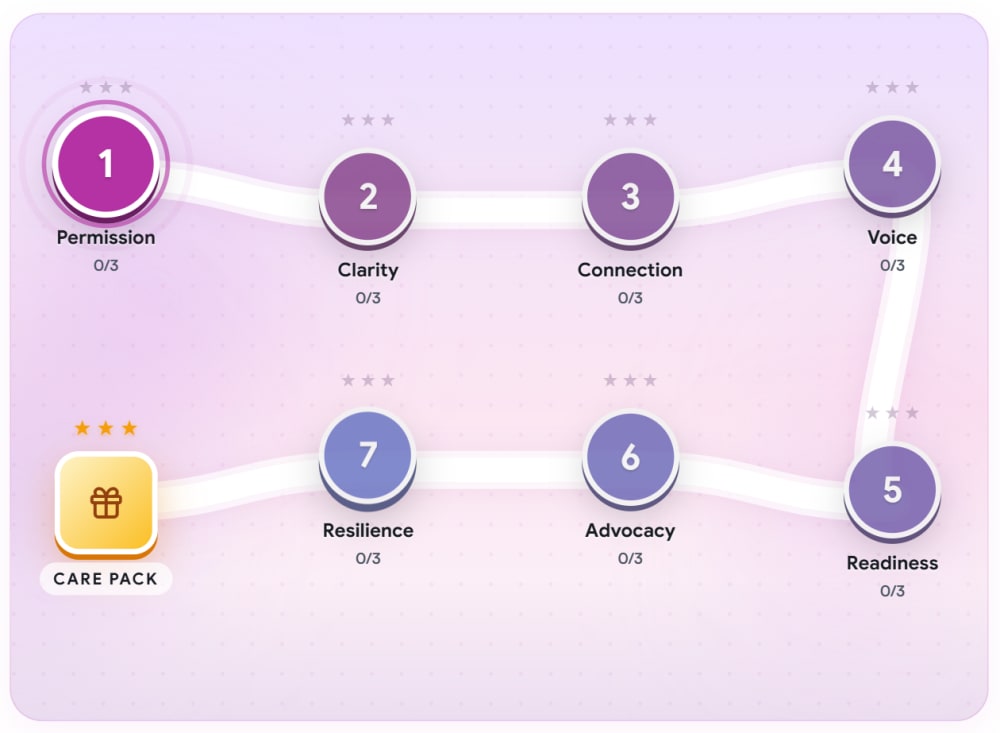
We formalised palliative care workbooks into seven stages of a care team’s journey, based on the 7 keys framework we learnt directly from the authors of Hope for the Best, Plan for the Rest — Dr. Sammy Winemaker and Dr. Hsien Seow. Our Collective Work App is the world’s first digital integration of workbook exercises from specialised palliative care experts, across diverse terminal illnesses.
Stage 1 of 7
Permission
“You're here. That's enough for now.”
What your family gains
Emotional permission to face reality alongside hope.
- 1.1Hopes and Fears
A map of what you're hoping for and what keeps you up at night — on paper, not just in your head.
- 1.2Walk Two Roads
Your family's shared declaration that hope and preparation are both acts of love.
- 1.3Good Days / Bad Days
A concrete picture of what good and bad days actually look like — for your loved one AND for you.
Nothing else is built for families like ours.
Built for the “we”, not the “I”
Most planning tools assume one patient deciding alone. Ours is built for collectivist families, where the whole family decides together.
The world’s first digital palliative workbook
The first digital integration of workbook exercises from specialised palliative care experts, based on the 7 keys framework of Dr. Sammy Winemaker and Dr. Hsien Seow.
Grounded in law and lived experience
Thirty questions built on the Uniform Health-Care Decisions Act 2023 with subject matter experts, and on the lived experience of medical migrants.
Plans that come with the money
Planning and funding live in one place, so a family’s wishes come with the shared resources to honour them.
Sponsor a care team
€30 opens a family’s whole care plan.
Paid once, for the whole team. Your gift covers their platform fee — it never becomes cash, and nothing about the family flows back to you.
- 1Choose how you givePick a family who shared their story.
- 2Secure checkoutYour gift covers their fee — it never becomes cash.
- 3Their plan unlocksThe whole family’s journey opens at once.
- 4The wall holdsYou’ll know a family was helped — never who they are.
Start your family’s care plan today.
It’s free to begin. Create your account, bring your three circles of care together, and answer your first question as a family.
- 1Create your accountSign up with your email — it takes a minute.
- 2Start your care teamInvite your immediate family, your family back home, and your chosen family.
- 3Answer your first question“Is A Whole Family Matter for you?” — together.